
Greenland ice sheet
Second-largest ice sheet, key driver of global sea level rise.

derivative work: Algkalv ( talk ) Greenland_stub.svg : PavelD · Public domain
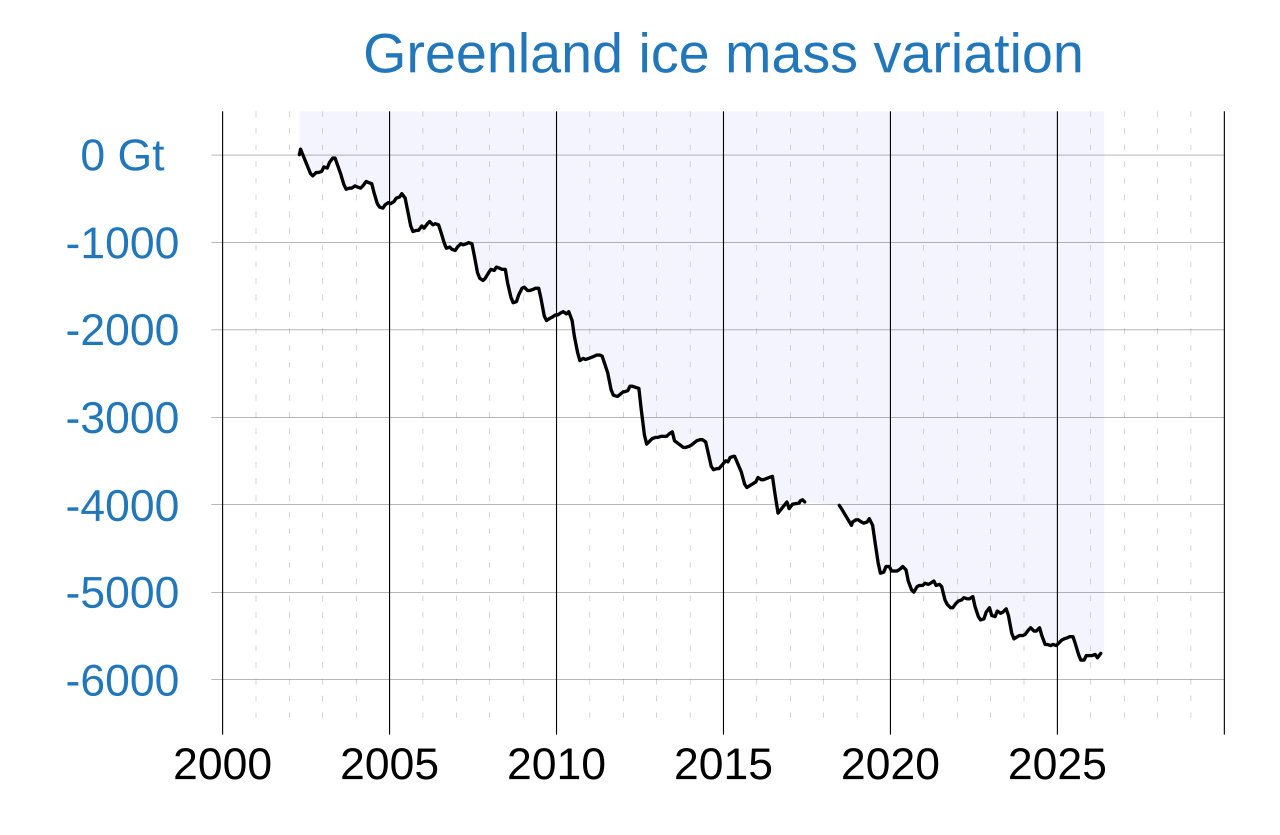
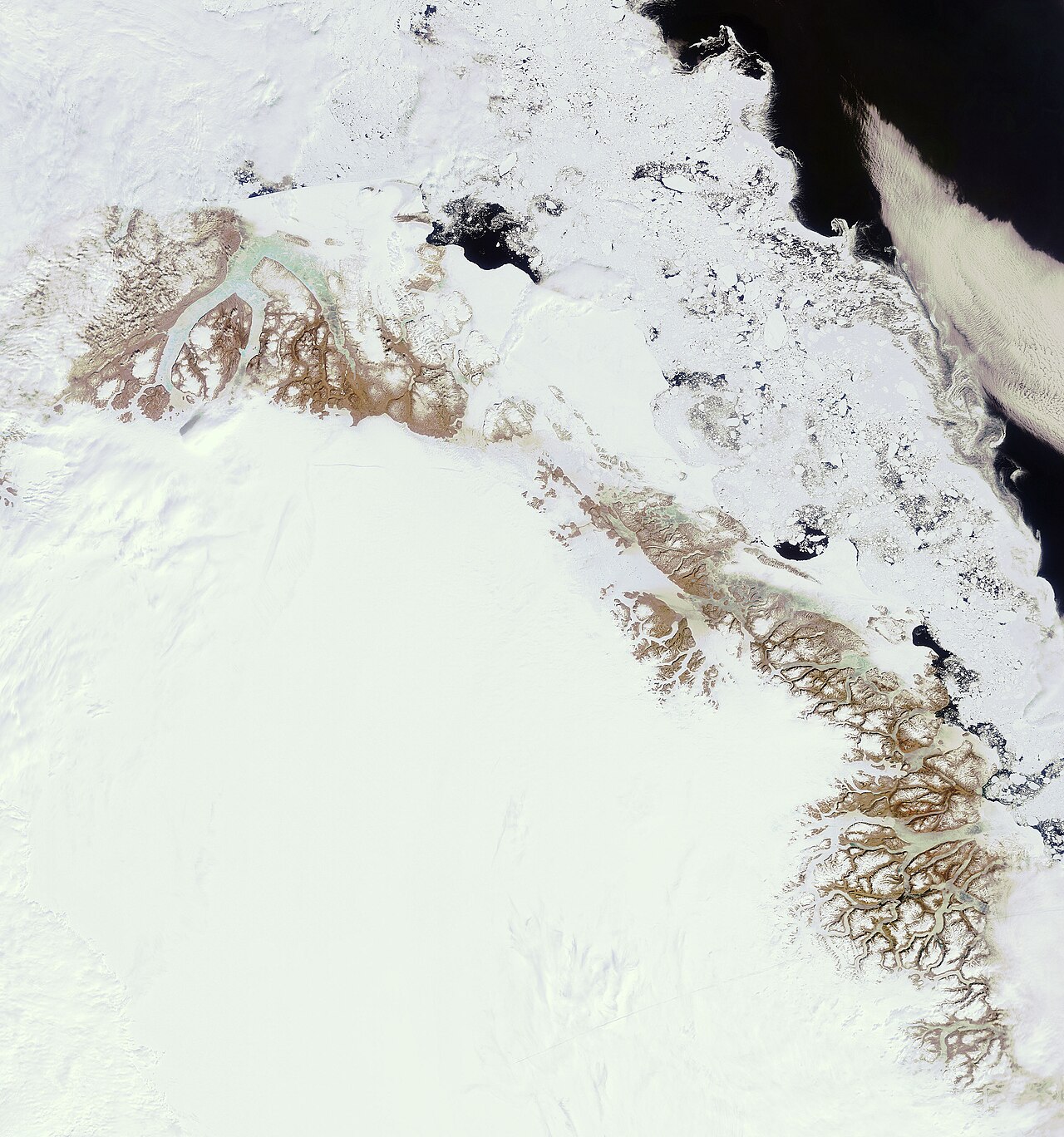
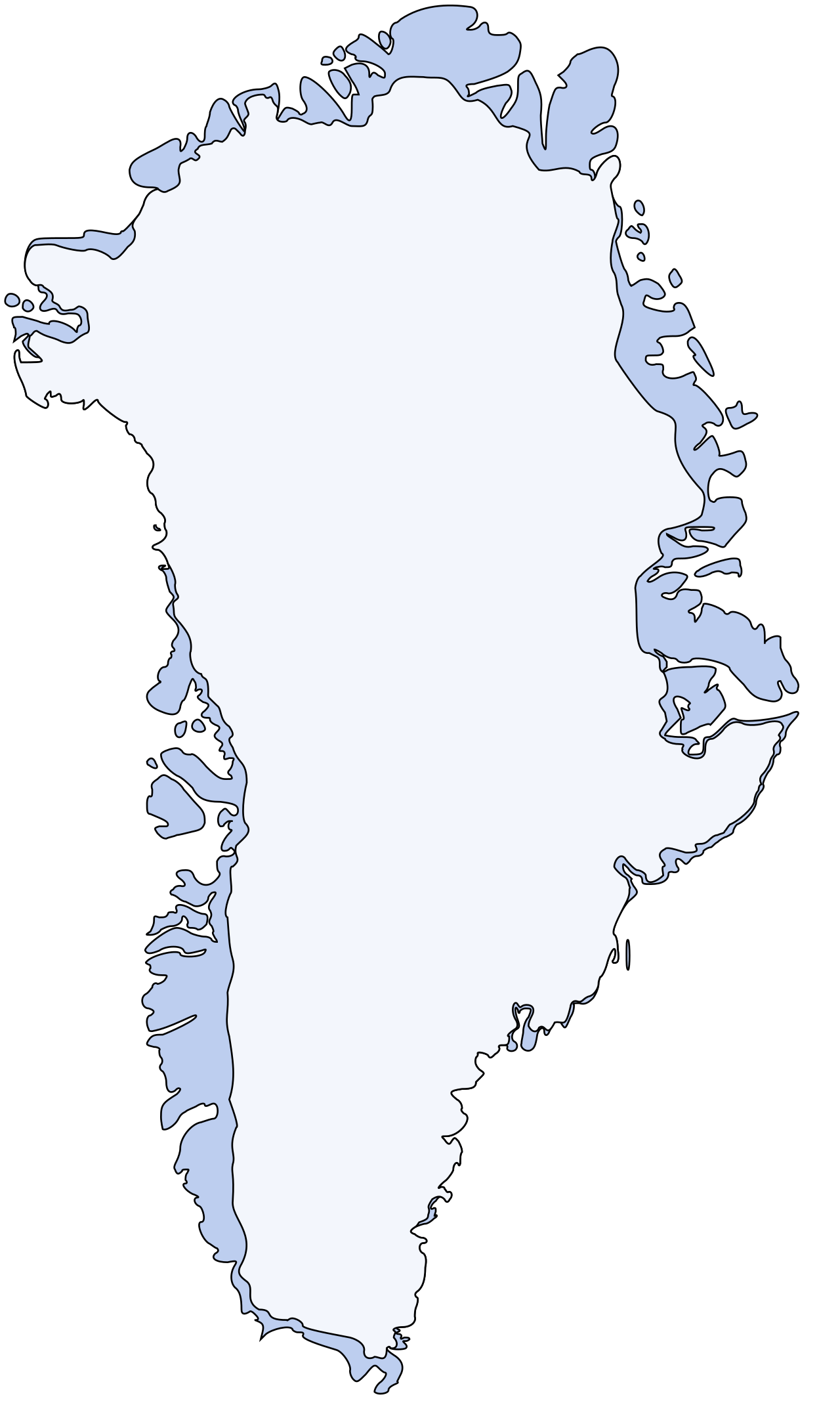
The Greenland ice sheet is the second-largest body of ice in the world, covering about 80% of Greenland's surface. It is a critical component of the global climate system, and its melting due to anthropogenic greenhouse gas emissions is a major contributor to sea level rise.
- sea level equivalent if melted
- ~7.4 m (24 ft)
Lore & Background
The Greenland ice sheet first covered most of the island about 2.6 million years ago, though glaciers existed for at least 18 million years. It has grown and contracted significantly since then, with the oldest known ice on Greenland being about 1 million years old.
Reader's Guide
The Greenland ice sheet's significance lies in its role as a major contributor to global sea level rise. Even if the Paris Agreement goal of staying below 2°C is met, melting would still add about 6 cm. If the entire ice sheet melted, global sea levels would rise by about 7.4 m. Geological evidence shows that during past warm periods, less than 10% of the current ice sheet volume remained when temperatures were less than 2.5°C warmer than preindustrial conditions. Ice cores from the summit provide records of rapid climate changes and human impacts, such as lead production from ancient Greece and Rome.
Did You Know?
- The Greenland ice sheet covers about 12% of the area of the Antarctic ice sheet.
- The oldest known ice on Greenland is about 1 million years old.
Physical Scale and Continental Dominance
In scientific literature, researchers commonly abbreviate it as GIS or GrIS. For perspective, its area represents roughly 12 percent of the Antarctic ice sheet, making it a truly continental-scale feature. Beneath this vast frozen expanse lie mountains and lake basins, a reminder that the ice sheet is not a uniform slab but a complex landscape shaped by the terrain it covers.
Deep-Time Formation and Tectonic Uplift
Greenland's relationship with ice stretches back at least 18 million years, though for much of that period the ice existed as scattered glaciers and ice caps rather than a unified sheet. These elevations intensified orographic precipitation and cooled surface temperatures, creating conditions favorable for persistent ice accumulation. As recently as 3 million years ago, during a Pliocene warm interval, ice was confined to the highest eastern and southern peaks.
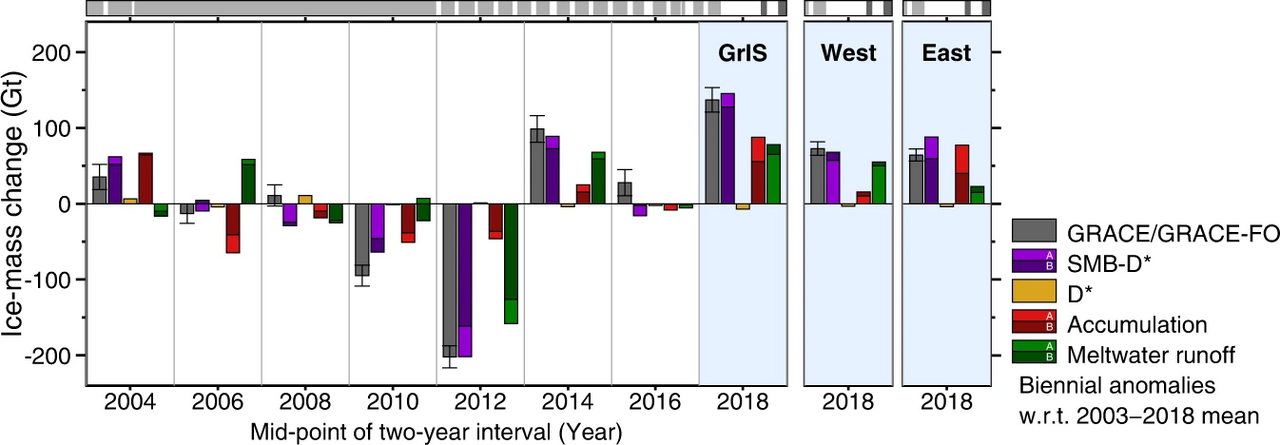
Accelerated Melting and Sea-Level Stakes
The consequences for global sea levels are measurable and escalating. Without emissions reductions, that figure climbs to roughly 13 centimetres, with a worst-case scenario reaching 33 centimetres. The stakes are not merely incremental; they represent a fundamental shift in the planet's hydrological balance.
Ice Flow, Calving, and the Ancient Record
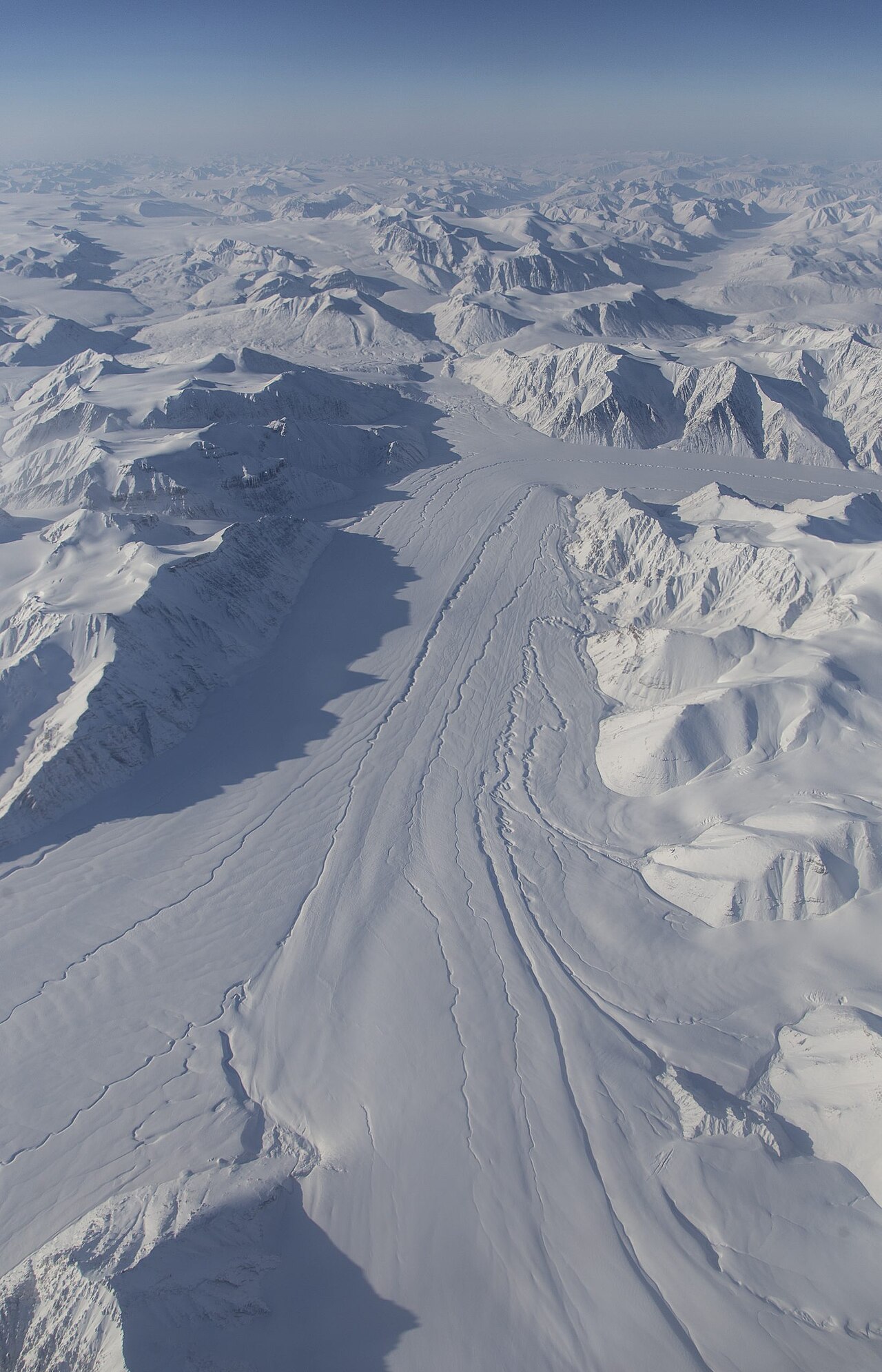
The immense weight of the ice sheet drives a slow gravitational flow outward, but coastal mountains in most directions act as barriers, channeling the ice into specific gaps where outlet glaciers carry it to the sea. The northwest and southeast margins are the principal routes for this discharge, where ice cliffs regularly calve into the ocean. Sediment liberated from calved and melting ice settles on the seafloor, and cores recovered from locations like the Fram Strait preserve long records of Greenland's glacial history. Beneath the summit, conditions are particularly remarkable: geothermal warmth at the base can melt ice into pressurized liquid water that erodes the bedrock, yet in some areas the basal ice has frozen solid to the ground, trapping ancient soil. The oldest such preserved soil has been buried under ice for approximately 2.7 million years, while a 3-kilometre-deep core has yielded ice roughly 1 million years old. These archives offer an unbroken window into climate conditions spanning most of the current ice age.
Gallery
Frequently Asked Questions
Why does the Greenland ice sheet matter for global sea level?
Because it stores such an enormous volume of freshwater, even a few percent of loss translates into measurable ocean-level rise worldwide. Its accelerating melt in recent decades has become one of the leading contributors to the current global sea-level increase.
What is driving the Greenland ice sheet to shrink?
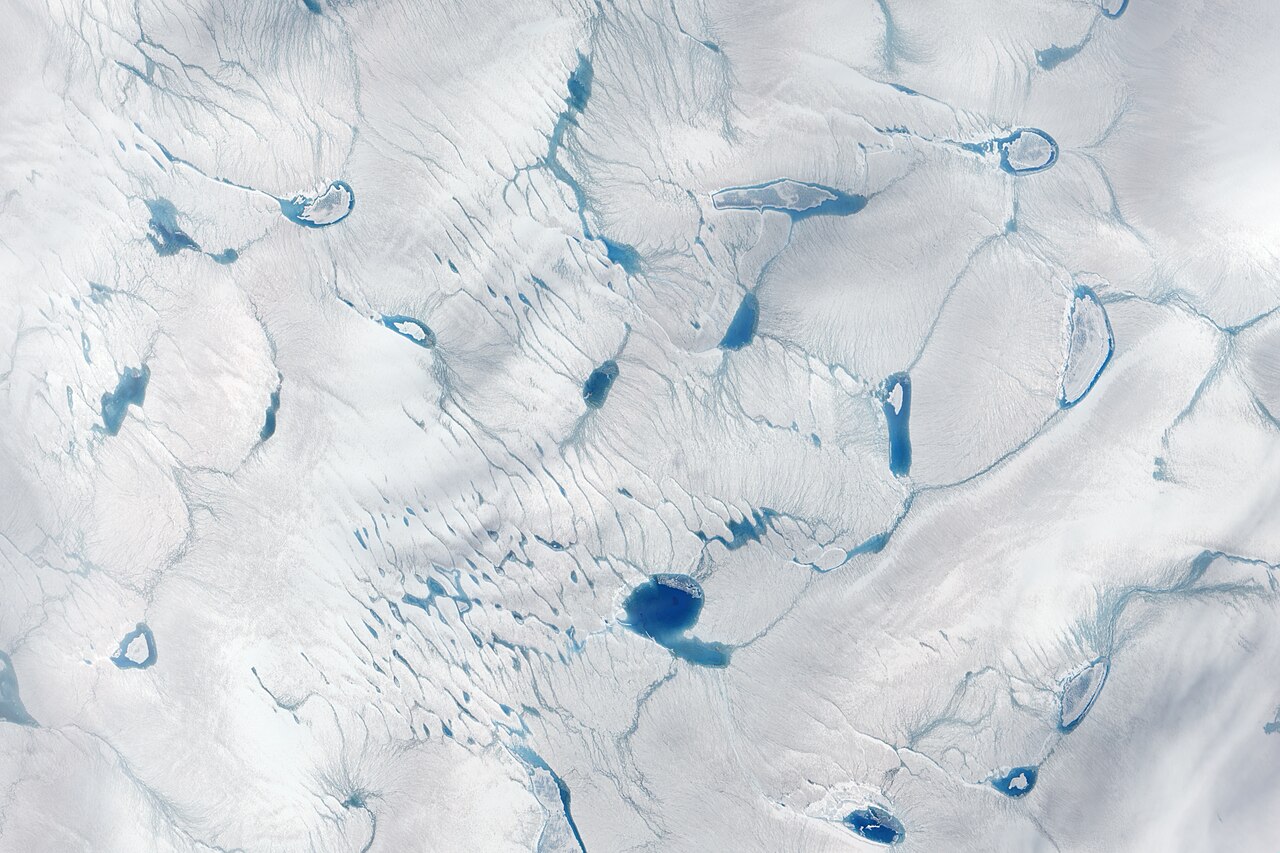
Warming air temperatures caused by human-emitted greenhouse gases are the principal force speeding up both surface melting and basal loss. In many sectors the sheet is now losing mass faster than seasonal snowfall can replace it.
How does the Greenland ice sheet compare to Antarctica's ice sheet?
Antarctica's sheet is larger in both area and volume, but Greenland's roughly 1.71 million square kilometers of ice still make it a colossal feature in its own right. Together the two sheets hold the overwhelming majority of Earth's land-based ice.
More in Islands And Archipelagos 1-24
Elsewhere in the Islands And Archipelagos universe
Spotted an error? Know more?
This is a living reference — every entry is fact-audited, and reader corrections feed straight into our audit queue. Suggest an edit · See this site's audit record