
Greater Antilles
Major Caribbean island group spanning four large islands and several territories.

via Wikipedia: Greater Antilles · see source
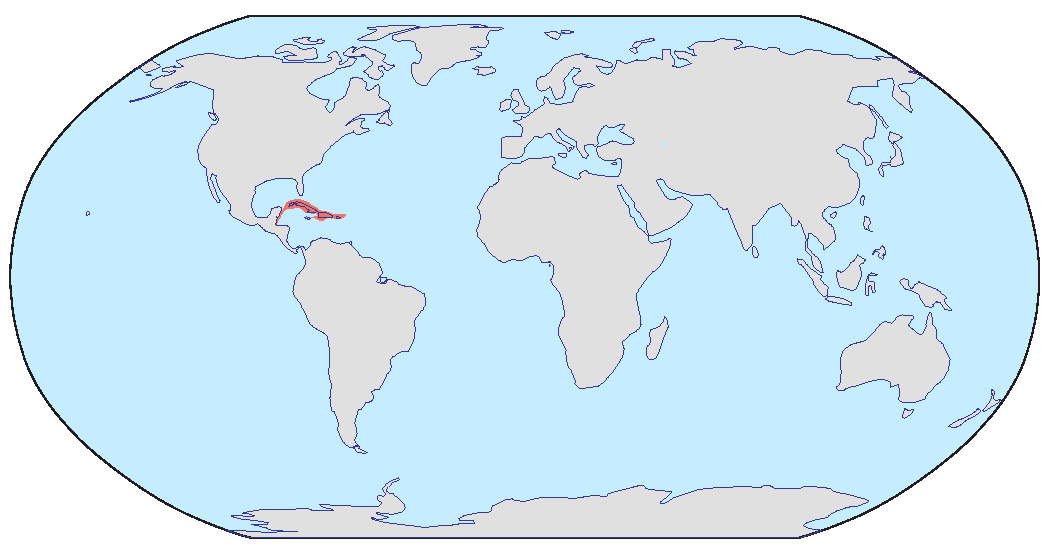
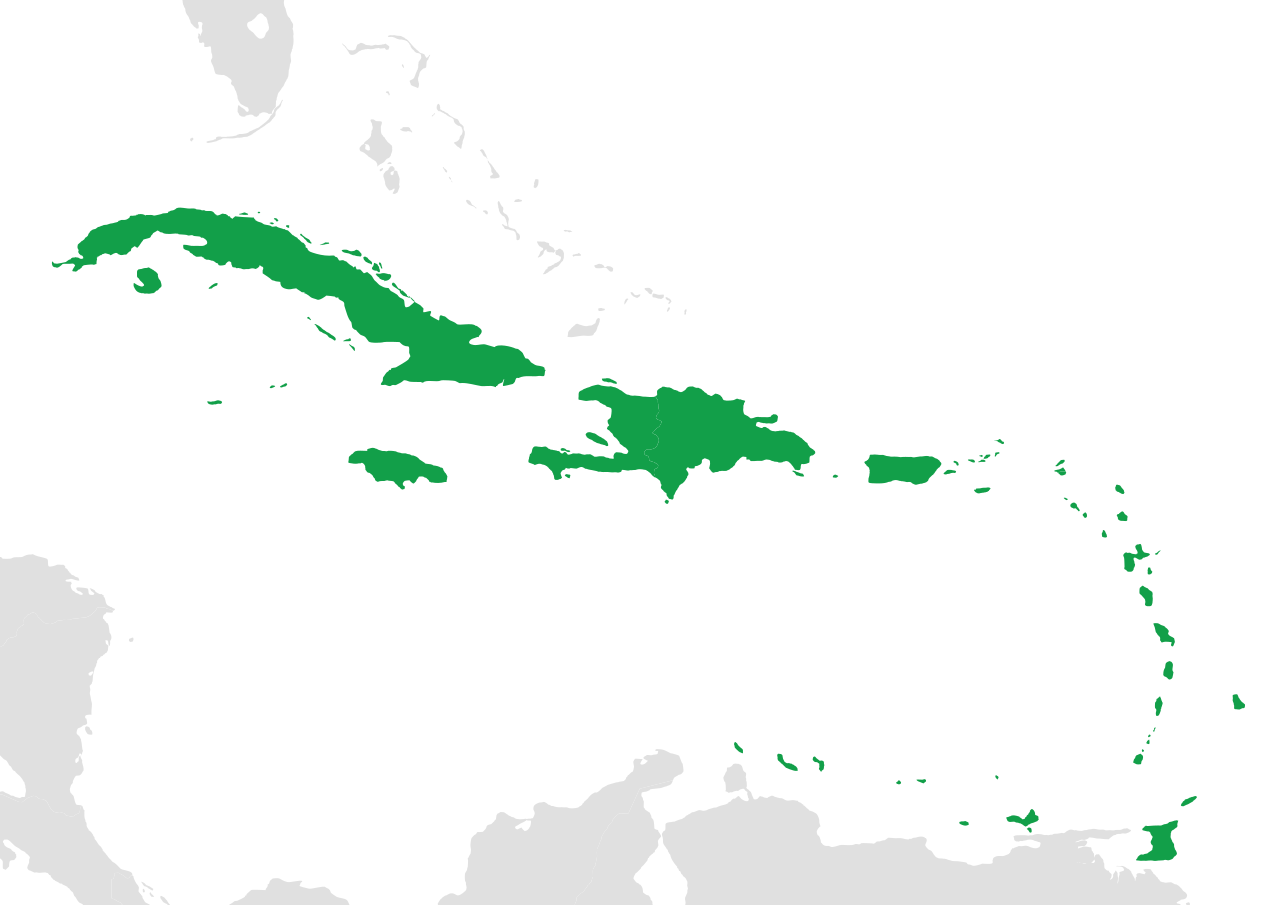
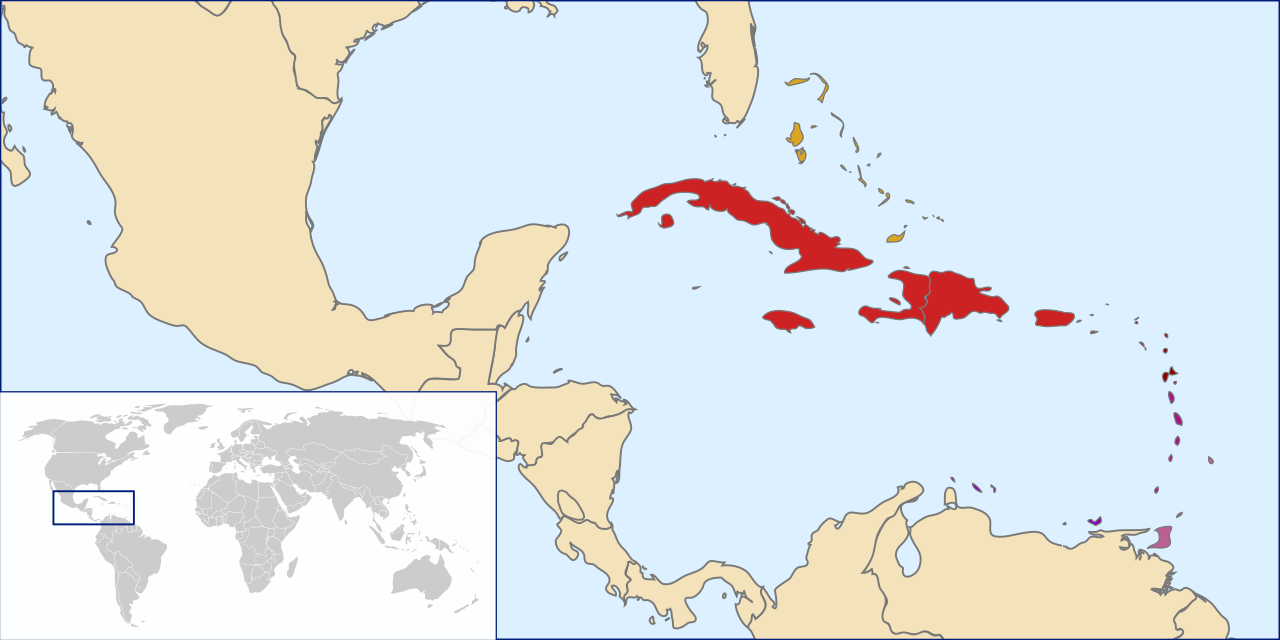
The Greater Antilles is a grouping of the larger islands in the Caribbean Sea, including Cuba, Hispaniola, Puerto Rico, and Jamaica, together with Navassa Island and the Cayman Islands. Seven island states share the region of the Greater Antilles, with Haiti and the Dominican Republic sharing the island of Hispaniola. Together with the Lesser Antilles, they make up the Antilles, which along with the Lucayan Archipelago form the West Indies in the Caribbean region of the Americas. While most of the Greater Antilles consists of independent countries, Puerto Rico and Navassa Island are unincorporated territories of the United States, while the Cayman Islands are a British Overseas Territory.
- Area
- 207,411 square kilometers (80,082 sq mi), not counting the Virgin Islands
- Population
- 38 million
- Largest island
- Cuba
- Most populated island
- Hispaniola
- Largest city
- Santo Domingo (over 2 million)
- Major languages
- Spanish, French, Haitian Creole, English
- Highest HDI category
- Very high (Puerto Rico)
Verified Timeline
Lore & Background
The word Antilles originated in the period before the European conquest of the New World. Europeans used the term Antillia as one of the mysterious lands featured on medieval charts, sometimes as an archipelago, sometimes as continuous land of greater or lesser extent, its location fluctuating mid-ocean between the Canary Islands and Eurasia. The first European contact with the Greater Antilles came from Christopher Columbus' first voyage to the Americas, as he sailed south from the Bahamas, exploring the northeast coast of Cuba and northern coast of Hispaniola. The Spanish began to create permanent settlements on Cuba and Hispaniola. The Atlantic slave trade brought many Africans to the islands. France began to exert influence over Haiti from 1625, dividing Hispaniola into two halves. Neighbouring Jamaica was invaded by the British, defeating the Spanish colonists. At the beginning of the 16th century, the Spanish began to colonize the island of Puerto Rico. Despite the Laws of Burgos of 1512 and other decrees protecting Indigenous populations, some Indigenous people were forced into an encomienda system of forced labor in the early years of colonization. The Haitian Revolution was the first and only successful anti-slavery and anti-colonial insurrection by self-liberated slaves; it established the independent nation of Haiti from France in 1804, the first and oldest black-led republic in the Americas as well as in the New World, the first in the Greater Antilles, the Caribbean, and Latin America as a whole. Haiti was also the second oldest independent nation in the Western Hemisphere after the United States. The next nation to achieve independence, the Dominican Republic, was also on Hispaniola, declaring independence from Spain in 1821. It was quickly absorbed by Haiti under the unification of Hispaniola. The Dominican Republic gained independence from Haitian rule in 1844 after the Dominican War of Independence. The rest of the Greater Antilles would remain under colonial rule for another hundred years. Along with the Philippines in Asia, Spain transferred possession of Cuba and Puerto Rico to the United States as a result of its loss in the Spanish-American War in 1898, coinciding with the Cuban War of Independence. This was the final loss of Spain's territorial possessions in the Americas. U.S. military rule over the island lasted until 1902, when Cuba was granted formal independence. In 1917, the U.S. Congress passed the Jones–Shafroth Act granting U.S. citizenship to Puerto Ricans born on or after April 25, 1898. In 1947, the U.S. Congress passed the Elective Governor Act, signed by President Harry S. Truman, allowing Puerto Ricans to vote for their own governor. The Cuban Revolution in 1959 established Cuba as the only communist state in the Greater Antilles. Jamaica was granted independence from the U.K in August 1962 becoming the last currently independent state in the Greater Antilles to achieve independence.
Reader's Guide
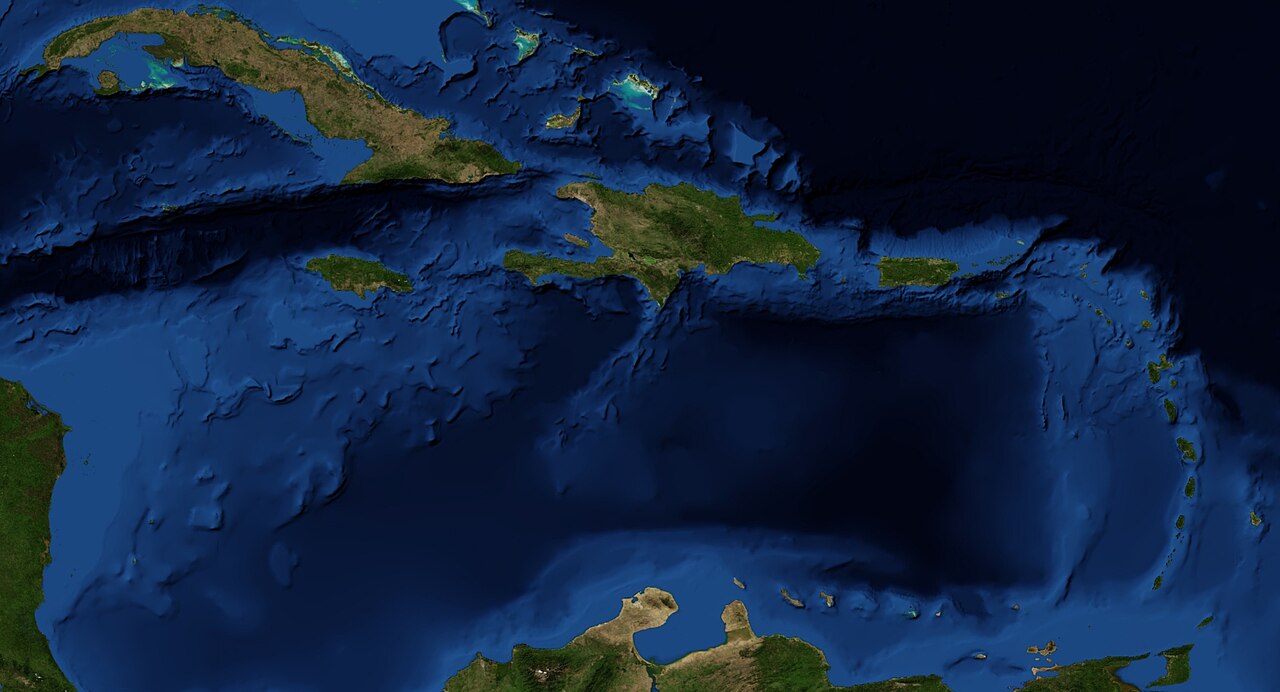
The Greater Antilles comprises four major islands and numerous smaller ones. The island of Cuba is the largest island in the Greater Antilles, in Latin America, and in the Caribbean. It is followed by Hispaniola. Geologically, the Virgin Islands are also part of the Greater Antilles, though politically they are considered part of the Lesser Antilles. With an area of 207,411 square kilometres (80,082 sq mi), not counting the Virgin Islands, the Greater Antilles constitute nearly 90% of the land mass of the entire West Indies, as well as over 90% of its population. The remainder of the land in the West Indies belongs to the archipelago of the Lesser Antilles, which is a chain of islands to the east, running north–south and encompassing the eastern edge of the Caribbean Sea where it meets the Atlantic Ocean, as well as to the south, running east–west off the northern coast of South America. The Lucayan Archipelago is not considered part of the Antilles archipelagos but rather of the North Atlantic. The islands exist because of the relative motion of the Caribbean plate and surrounding plates. Obduction has scraped accumulated rock onto the North American plate, islands and intrusions have been formed by volcanism, and the local crust has become deformed in other ways. The Greater Antilles is considered part of Latin America. With a population of 38 million, it makes up 6% of Latin America's population. The capital of the Dominican Republic, Santo Domingo, with a population of over 2 million, is the largest city in the Greater Antilles. Other large cities include Havana, Port-au-Prince, Kingston and San Juan. In 2018, the quality of life was similar in Cuba, the Dominican Republic and Jamaica, whose Human Development Index (HDI) categorized them as 'high human development'. Puerto Rico and the Cayman Islands are categorized as 'very high'. Haiti had the lowest HDI in the Greater Antilles and in all of the Americas, categorized as 'Low human development'. The languages are mostly colonial languages, along with some Creole influence. Spanish is the main language in Cuba, the Dominican Republic and Puerto Rico. Haiti has a Creole language, Haitian Creole, as one of its official languages, alongside French. English is the main language in Jamaica and the Cayman Islands, though it is also an official language of Puerto Rico, where it is spoken as a second language. In Jamaica, a Creole language is spoken but carries no official recognition.
Did You Know?
- The Greater Antilles constitute nearly 90% of the land mass of the entire West Indies, as well as over 90% of its population.
- Haiti was the first and only successful anti-slavery and anti-colonial insurrection by self-liberated slaves, establishing the independent nation in 1804.
- The Jones–Shafroth Act of 1917 granted U.S. citizenship to Puerto Ricans born on or after April 25, 1898.
- Cuba is the largest island in the Greater Antilles, in Latin America, and in the Caribbean.
- Haiti had the lowest Human Development Index in the Greater Antilles and in all of the Americas in 2018.
A Mosaic of Sovereignty and Colonial Legacy
The Greater Antilles is a patchwork of political arrangements that mirrors centuries of European rivalry. Seven island states share the region, yet full sovereignty is not universal. Puerto Rico and Navassa Island remain unincorporated U.S. territories, while the Cayman Islands fall under British administration as an Overseas Territory. The Spanish were the first to establish permanent settlements on Cuba and Hispaniola, extending their colonial reach to Puerto Rico in the early 16th century. France carved out influence over what became Haiti from 1625 onward, splitting Hispaniola into two halves. The British displaced Spanish colonists on Jamaica. Spain's final loss of its American possessions came in 1898, when Cuba and Puerto Rico were ceded to the United States after the Spanish-American War. U.S. military governance over Cuba persisted until 1902, when formal independence was granted. The Jones-Shafroth Act of 1917 extended U.S. citizenship to Puerto Ricans, and the 1947 Elective Governor Act allowed them to choose their own governor. This layered history means the region's political status remains a living echo of imperial competition.
Revolution and the Long Road to Independence
The Haitian Revolution stands as a singular event in world history: the first and only successful anti-slavery, anti-colonial insurrection led by self-liberated enslaved people. In 1804 it produced Haiti, the first black-led republic in the Americas and the second-oldest independent nation in the Western Hemisphere after the United States. Its neighbor on Hispaniola, the Dominican Republic, declared independence from Spain in 1821 but was swiftly absorbed into Haiti under a brief unification of the island. Dominican independence was finally secured in 1844 after the Dominican War of Independence. The remaining islands endured colonial rule for roughly another century. Cuba's path was shaped by the 1898 Spanish-American War and the concurrent Cuban War of Independence, leading to U.S. military rule until 1902. The Cuban Revolution of 1959 then established Cuba as the sole communist state in the region. Jamaica, the last currently independent Greater Antillean state, gained its freedom from Britain in August 1962.
Land, Plate, and Position in the Caribbean
The Greater Antilles is dominated by four major islands—Cuba, Hispaniola, Puerto Rico, and Jamaica—along with smaller entities like Navassa Island and the Cayman Islands. Cuba is the largest island in the Greater Antilles, in Latin America, and in the Caribbean, stretching to the western end of the group. Puerto Rico anchors the eastern end, while Hispaniola, the most populated island, sits in the middle. Jamaica lies south of Cuba, and the Cayman Islands occupy the southwest. Together, excluding the Virgin Islands, the archipelago spans 207,411 square kilometres and accounts for nearly 90 percent of the West Indies' total land mass and over 90 percent of its population. Geologically, these islands exist because of the relative motion between the Caribbean plate and its neighbors. Obduction scraped accumulated rock onto the North American plate, volcanism produced islands and intrusions, and the local crust underwent further deformation. The Florida Keys, though north of Cuba, are not part of the Greater Antilles, and the closest mainland point is the state of Florida.
People, Cities, and Uneven Development
The Greater Antilles is classified as part of Latin America and is home to roughly 38 million people, about six percent of the continent's total population. Santo Domingo, capital of the Dominican Republic, is the region's largest city with over two million residents, followed by Havana, Port-au-Prince, Kingston, and San Juan. Linguistically, the region is shaped by its colonial past: Spanish predominates in Cuba, the Dominican Republic, and Puerto Rico, while Haiti officially uses Haitian Creole alongside French, and English carries influence in Jamaica. Yet human development outcomes vary dramatically. Cuba, the Dominican Republic, and Jamaica are categorized as having high human development, while Puerto Rico and the Cayman Islands reach the very high tier. Haiti, by contrast, recorded the lowest Human Development Index in the Greater Antilles and in all of the Americas, falling into the low human development category. This stark gradient within a single island group underscores how shared geography does not guarantee shared prosperity.
Gallery
Frequently Asked Questions
What is the Greater Antilles?
The Greater Antilles is the collection of the largest islands in the Caribbean Sea, encompassing Cuba, Hispaniola, Puerto Rico, Jamaica, and the Cayman Islands. Together they cover roughly 207,000 square kilometers and are home to about 38 million people.
Which islands and territories make up the Greater Antilles?
The group includes four major landmasses—Cuba, Hispaniola, Puerto Rico, and Jamaica—plus the Cayman Islands. Hispaniola is shared between Haiti and the Dominican Republic, making six distinct political entities across the region.
How does the Greater Antilles fit into the broader West Indies?
The Greater Antilles and the Lesser Antilles together form the Antilles, and when you add the Lucayan Archipelago, all three make up the West Indies in the Caribbean region of the Americas.
What is the largest and most populated island in the Greater Antilles?
Cuba holds the title for the largest island by area, while Hispaniola is the most densely populated. The region's biggest city, Santo Domingo, sits on Hispaniola and has a metro population exceeding two million.
What languages are spoken across the Greater Antilles?
Spanish dominates in Cuba, Puerto Rico, and the Dominican Republic, while French and Haitian Creole are the primary tongues of Haiti. English is the official language in Jamaica and the Cayman Islands.
More in Islands And Archipelagos 1-24
Elsewhere in the Islands And Archipelagos universe
Spotted an error? Know more?
This is a living reference — every entry is fact-audited, and reader corrections feed straight into our audit queue. Suggest an edit · See this site's audit record